


Most latte art looks harder to pour than it actually is. The five designs that make up a barista’s core skill set are built on two foundations: a well-pulled espresso shot and properly steamed milk.
Before attempting any pattern, both need to be right. Espresso must have crema, the golden-brown emulsified layer produced during extraction, which provides the surface the foam floats on long enough to form a design. Steamed milk needs a smooth, glossy consistency. With both in place, the designs below become achievable.
What Are the Different Types of Latte Art?
Latte art designs range from beginner-friendly shapes like hearts and dots for a home party to advanced patterns that wow guests at wedding coffee services, such as rosettas and swans.
How you approach the pour depends on skill level, with each tier building on the technique developed in the previous one. Every coffee design made through free-pour depends on microfoam quality, cup angle, and pour control.
Beginner Latte Art Designs to Start With
These two designs cover the fundamentals that every more complex pattern assumes you already have.
The Heart
The heart is the foundation of latte art and the right place to start. A white dot is created at the centre of the cup, the pour is sped up to widen the shape, then the pitcher is lifted and pulled through the centre to define the point. Mastering the heart builds the muscle memory for flow control and the pull-through motion that appears in every design that follows.
The Monk’s Head
Simpler than the heart, the monk’s head is a clean circle with a small indentation at the top. It removes the pull-through step entirely and is most useful for developing a steady, centred pour before progressing to layered latte art patterns.
Intermediate Latte Art Patterns
Moving into intermediate territory means adding a new layer of control to the pour. The muscle memory from the heart is still in play. What changes is what happens between the pours.
The Tulip
The tulip stacks a series of small heart-like layers, each pushed into the one before it. Unlike the heart, the pour is interrupted and restarted multiple times to create defined sections. It is a strong milestone pattern because it introduces controlled layering, a concept that carries into every advanced design.
Advanced Latte Art Designs
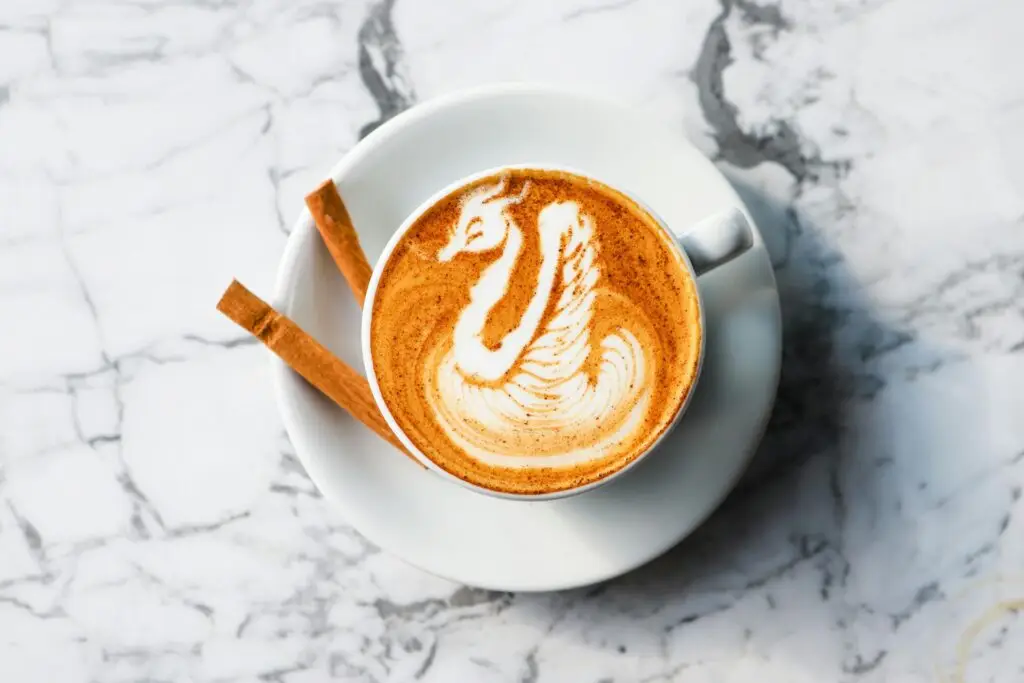
These are the designs that take the longest to produce cleanly and the longest to forget. Both require a level of automaticity that only comes from repetition of the earlier patterns.
The Rosetta
The rosetta produces a feathered, leaf-like structure. It is achieved by moving the pitcher backward while shaking it side to side, creating symmetrical fronds. Producing it cleanly requires simultaneous control over lateral movement and pour speed, two variables that take real time to coordinate.
The Swan
The swan is a showpiece design. A tulip or rosetta forms the body, then a final thin-stream cut draws the long, curved neck. It requires confidence across multiple latte art techniques in a single uninterrupted pour and is a signature of an experienced barista.
What Are Common Latte Art Mistakes?
Three errors tend to separate people who know the steps from those producing clean, consistent results.
- Foam that is too thick or bubbly will not sit cleanly on the crema. It sinks rather than floats, and the design disappears before it forms. (For a closer look at why crema matters in espresso-based drinks, explore our Long Black vs Americano guide.)
- Holding the pitcher too far from the surface causes a similar problem: foam drops rather than settles, and the shape loses definition.
- Pouring too fast throughout breaks surface tension before the pattern has a chance to form.
Each of these errors starts long before the design phase.
Key tips for cleaner, more consistent designs
Four adjustments that translate directly into better results:
- Tilt the cup at 45 degrees and fill the base with milk before starting the design.
- Lower the pitcher spout close to the surface the moment the design begins.
- Speed up to spread the foam, then slow down and lift to cut and define the shape.
- Keep angle, pitcher distance, and pour speed consistent across every attempt.
Consistency across these variables is what separates a passable pour from a refined one.
From Heart to Swan: The Latte Art Journey
These five designs are not a collection of unrelated patterns. They form a ladder. The heart teaches flow control. The monk’s head reinforces centring. The tulip introduces layering. The rosetta adds lateral movement. The swan combines everything into a single uninterrupted sequence. Skipping a rung does not save time.
Reading about latte art technique is a starting point. Just like coffee making itself, latte art is a skill that develops through practice, and the fastest way to move through this progression is with live feedback from someone watching the pour.
Our latte art workshops in Singapore are kept to a maximum of eight participants so every person gets the guidance they need. Suitable for beginners, couples, friends, and corporate team-building groups, every session is hands-on from the first pour. Next time you see coffee cart catering at an event, you’ll know exactly what goes into every latte art design.


